















ADVENDURE is the leading web portal in Greece about Mountain Running, Adventure, Endurance and other Mountain Sports
info@advendure.com



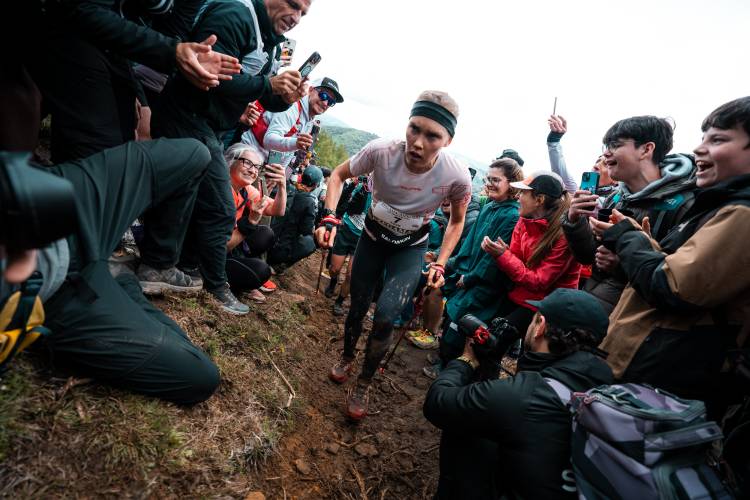 Photo copyright: Koastalforest
The interview you are about to read is particularly important, as it brings us face to face with someone who is playing a decisive role in shaping the future of trail running on a global scale. Greg Vollet, Sport Director and the driving force behind the creation of the Golden Trail World Series (GTWS), has been at the forefront of building and developing one of the most important international trail running circuits. He is at the very heart of the evolution of a sport that is growing rapidly, becoming increasingly international and striving to establish its place on the global sporting stage.
With the exciting 2026 season now behind us, we had the opportunity to discuss with him not only the highlights of this year's GTWS, but also what lies ahead. What do the latest competition innovations mean? How is the international competitive landscape changing with the impressive emergence of African athletes? How important is it to create genuine opportunities for emerging talents from every corner of the world? And how can trail running evolve into a truly global professional sport without losing the authenticity and values that make it so special?
Our conversation also explores Greg Vollet's vision for the next decade, the GTWS's 10th anniversary in 2027, the international expansion of the series, the growth and future of professional athletes, television coverage and, ultimately, the very identity and future of trail running.
A truly special interview with someone who is not merely witnessing the sport's evolution but actively helping to shape it, offering us a rare insight into the philosophy, decisions and ambitions behind a series that aspires to play a leading role in the future of the sport.
A big thank you to Greg Vollet!


Greg Vollet: Sport Director and Driving Force of the GTWS!
[Advendure]: Now that the 2026 season has come to an end, how would you evaluate this year's Golden Trail World Series? What are the main achievements you are most proud of, and is there anything you feel could have been done better?
[Greg Vollet]: I think 2026 has been one of the most exciting and competitive seasons since we created the Golden Trail World Series.
What makes me particularly proud is seeing how much the level of competition has improved over the years. When we launched the GTWS in 2018, our ambition was to bring together the world's best athletes on the world's most iconic short-distance trail races, while creating a product that could reach an audience far beyond the traditional trail running community.
Today, we are seeing that vision become a reality.
The level of the athletes is extraordinary. Races are becoming faster, more tactical and increasingly unpredictable. The men's overall title being decided by just two points in the final race is a perfect illustration of how competitive the championship has become.
Another important achievement in 2026 was the continued professionalisation of the circuit. We increased the prize money, introduced new sporting elements, strengthened our anti-doping programme and continued developing our international television coverage.
For me, increasing financial opportunities for athletes is fundamental. If we want trail running to become a truly professional sport, we need to create an environment where the best athletes can make a living from their performances.
Of course, there is always room for improvement.
One of our biggest challenges remains the logistical complexity of organising a truly global series. Travelling between continents, managing different race organisations and ensuring consistent standards for athletes are demanding tasks. But I think the most important thing is that we never stop questioning ourselves. A successful season doesn't mean we have achieved everything. It means we have created a stronger foundation for the next one.

[Advendure]: The 2026 season introduced significant changes to the competition format, particularly the new segment-based bonus points and the team ranking. The men's overall title was ultimately decided by just two points, with Elhousine Elazzaoui claiming his third consecutive crown. On the women's side, Madalina Florea successfully defended her title. Looking back at their first year, how satisfied are you with these innovations? Do you believe they have achieved the right balance between rewarding consistency, individual race performance and adding excitement to the competition?
[Greg Vollet]: I'm very satisfied with the direction we have taken, although I believe we should continue refining the system based on what we learned this season.
The idea behind the segment points was quite simple: we wanted to create more opportunities for athletes to express their strengths and make the races even more exciting.
Trail running is a fascinating sport because it combines several different physical and technical abilities. Some athletes are exceptional climbers, others are incredible downhill runners, and some have tremendous speed on flatter sections.
Why shouldn't we recognise these qualities?
By introducing uphill, downhill and sprint segments, we created additional sporting challenges within each race. An athlete who may not be fighting for the overall victory can still have a reason to attack, take risks or demonstrate a particular ability. It also creates additional stories for spectators and television viewers to follow.
The two-point difference between Elhousine Elazzaoui and Patrick Kipngeno at the end of the season demonstrates how important every performance can be. At the same time, we must be careful not to make the ranking too complicated. The overall winner must remain the athlete who has demonstrated the best combination of performance, consistency and the ability to deliver under pressure.
Regarding the team ranking, I think it is an important development for the future of the sport. Trail running has traditionally been very individual, but behind every professional athlete there is often an entire team: coaches, managers, physiotherapists, equipment specialists and sponsors. Creating a team competition gives another dimension to the championship. It also encourages brands to invest not just in individual stars, but in building balanced teams, supporting both male and female athletes.
Ultimately, our goal is not to introduce changes simply for the sake of innovation. Every change should improve the sporting competition, the experience for athletes or the understanding and enjoyment of the sport for spectators.

[Advendure]: We have witnessed a growing presence and influence of African athletes in the men's field, particularly Kenyan runners, but also athletes from other countries such as Morocco, with Elhousine Elazzaoui now a three-time GTWS champion. How do you see this evolution shaping the competitive landscape of the series? Are we witnessing a broader shift in international trail running, and what could this mean for the future of the sport?
[Greg Vollet]: I see this evolution as something extremely positive for trail running.
For many years, the international trail running scene was largely dominated by European athletes, particularly those coming from countries with strong mountain-running traditions. But running talent has never been limited to Europe.
What we are witnessing today is the progressive internationalisation of our sport, and I believe we are still only at the beginning of this transformation.
Kenya is a particularly interesting example. We all know the extraordinary depth of running talent in the country, but historically, most opportunities have been concentrated on track and road running. Trail running is now opening another door for these athletes, allowing them to express their exceptional aerobic abilities in a completely different environment.
However, being an outstanding road runner doesn't automatically make you a great trail runner. Technical skills, downhill running, tactical intelligence and experience in the mountains remain essential. What impresses me is how quickly some of these athletes are developing these abilities and adapting to the specific demands of our sport.
Elhousine Elazzaoui is another remarkable example. Winning three consecutive GTWS titles is an extraordinary achievement, particularly considering how much the competitive level has increased in recent years. His success demonstrates the importance of combining natural talent, technical ability, consistency and experience.
But what I find particularly interesting is that this evolution is not limited to the men's competition.
Look at the women's overall ranking in 2026. Mădălina Florea, from Romania, won her second consecutive GTWS title ahead of two exceptional Kenyan athletes, Caroline Kimutai and Ruth Gitonga.
Romania is not traditionally considered one of the dominant nations in international mountain running, yet a Romanian athlete has managed to establish herself at the very top of the sport, competing against and beating athletes from one of the strongest running nations in the world.
For me, this is a perfect illustration of what makes trail running so fascinating. Different athletes bring different qualities, different training backgrounds and different approaches to competition.
The strongest runner on the flat isn't necessarily the strongest climber, and the strongest climber isn't necessarily the fastest downhill runner. Trail running requires a unique combination of physical, technical and mental abilities.
And that's why I don't see the arrival of more African athletes as a threat to European trail running. Quite the opposite. Competition creates progress. When the level increases, everyone has to adapt and improve. Athletes become more professional, training methods evolve, and the overall level of the sport continues to rise.
This is exactly what we want to see.
I also believe this internationalisation is one of the greatest opportunities for the future of trail running. We are discovering new talents, reaching new audiences and showing that our sport can extend far beyond the countries where it historically developed.
But we also have a responsibility to ensure that talented athletes from different parts of the world have genuine opportunities to access international competition, regardless of their financial background or the resources available in their home countries.
This is where I believe the GTWS can play an important role, particularly through the Golden Trail National Series and the Golden Ticket system.
And we saw another fantastic example of this at the 2026 Grand Finale in South Korea, with Miriam Morales Hernández, a young Mexican athlete from Oaxaca, winner of a Mexican Golden Ticket, without any sponsor, invited to take part of the final and finishing third against some of the best trail runners in the world.
For me, this is exactly the kind of story we want to create. An athlete coming from a country that is not traditionally among the dominant nations in international trail running, reaching the podium of one of the most competitive races of the season.
It shows that incredible talent exists everywhere. Sometimes, what makes the difference is simply having the opportunity to compete on the international stage.
And this is one of the missions of the GTWS: not only to bring together the biggest names in trail running, but also to help discover the champions of tomorrow.
Ultimately, the future of trail running shouldn't belong to a handful of countries with a long mountain-running tradition. It should belong to the best athletes in the world, wherever they come from.
And I believe that is one of the most exciting things happening in our sport today.

[Advendure]: The Golden Trail National Series and the Golden Tickets continue to provide opportunities for emerging athletes to reach the world stage, as we saw with Andrea Kolbeinsdóttir's victory in Muju Trail. How important is this pathway for the future of the GTWS, and are there plans to further strengthen the connection between national and international competition?
[Greg Vollet]: Andrea's victory in Muju is probably one of the best examples of why we created this pathway.
A relatively unknown athlete on the world stage receives an opportunity through the Golden Ticket system, arrives at the Grand Finale and beats the best runners in the world.
This is exactly the kind of story that makes sport exciting.
From the beginning, I never wanted the GTWS to become a closed championship reserved for a small group of established professional athletes.
Of course, we need the biggest names because they create visibility and help develop the sport. But we also need to discover the next generation. There are incredibly talented athletes competing in national races who simply don't have the financial resources, sponsorship or connections to travel internationally.
The Golden Trail National Series and the Golden Tickets create a bridge between these athletes and the highest level of competition. And sometimes, all an athlete needs is one opportunity. I believe this pathway is fundamental to the long-term credibility of the GTWS. A World Series should be accessible to the best athletes, not only to those who already have the strongest sponsors.
Looking ahead, I would like to see these connections between national and international competitions become even stronger. But we need to develop them carefully, with consistent sporting standards and a sustainable structure. The objective is to identify talent, offer opportunities and make sure that the next generation can challenge the established champions. Andrea's performance is proof that the system can work.

[Advendure]: The 2026 calendar combined iconic races such as Zegama-Aizkorri and Sierre-Zinal with new destinations in Canada, Japan, China and South Korea. What are the main criteria when selecting races and destinations, and how do you balance the heritage of established events with the ambition to keep expanding the series globally?
[Greg Vollet]: This is probably one of the most important responsibilities we have when building the GTWS calendar. For me, the first criterion has always been the sporting quality of a race.
We are not simply looking for beautiful destinations or spectacular landscapes. We need races that provide exciting competition, challenging courses and the right environment for the world's best athletes to compete against each other.
But a great race is much more than a course. It is also about history, atmosphere, spectators, organisation and the connection between the event and its local community. Take Zegama-Aizkorri or Sierre-Zinal. These are not just competitions. They are part of the history and culture of Trail Running. The atmosphere in Zegama, with thousands of spectators in the mountains, is something very special. And Sierre-Zinal has a history and sporting prestige that few races in the world can match.
These events represent an essential part of the DNA of the GTWS. At the same time, if we want trail running to become a truly global sport, we cannot remain exclusively in Europe. We need to bring the highest level of competition to other continents, develop new audiences and create opportunities for athletes from different regions.
Canada, Japan, China and South Korea are interesting markets, but they also offer different terrains, cultures and sporting challenges. Our ambition is to find the right balance between heritage and innovation. I don't believe we should expand simply to have more flags on a calendar. Every new destination must bring something valuable to the championship.
We also have to consider logistical challenges, travel costs, athlete recovery, television production and the quality of local organisation. And importantly, we want to develop long-term relationships with our races rather than constantly changing destinations. The GTWS needs iconic events that people can identify with, while remaining open to discovering the iconic races of tomorrow.

[Advendure]: Looking ahead to 2027, the Golden Trail World Series will celebrate its 10th anniversary. Although it may still be a little early to reveal specific details, can you give us an idea of what to expect from next season? More broadly, how do you envision the GTWS evolving over the next decade and what role do you want it to play in the future of international trail running?
[Greg Vollet]: It's quite emotional for me to think that we are approaching the tenth season of the Golden Trail World Series. When we started this project in 2018, I don't think many people imagined how much it could evolve. At that time, our ambition was to create something different in trail running. We wanted to bring the best athletes together, create exciting rivalries, produce high-quality television coverage and show that trail running could become a modern and internationally recognised professional sport without losing its authenticity.
Ten seasons later, I think we have demonstrated that this vision was possible. But for me, the tenth anniversary shouldn't simply be a celebration of the past.
It should be the beginning of the next chapter. We are currently working on different ideas to make 2027 a special season, both for the athletes and for the fans. I can't reveal all the details yet, but we want to celebrate the history of the GTWS while continuing to improve the championship.
Looking further ahead, I see several important priorities. The first is continuing to professionalise the sport. Athletes need better financial opportunities, stronger support structures and greater recognition for their performances. Increasing prize money is part of this process, but professionalisation also means improving athlete services, competition standards and long-term career opportunities.
The second priority is international development. I would love to see trail running become a sport where athletes from Europe, Africa, Asia, North America, South America and Oceania can compete on genuinely equal terms. That means developing opportunities, not simply organising races in different countries.
The third is media visibility. I strongly believe trail running has enormous potential as a spectator sport. It combines extraordinary athletic performances, dramatic landscapes, tactical competition and very human stories. Our challenge is to make these stories accessible and understandable to a broader audience. We should be able to attract someone who has never run a trail race, simply because the sporting competition is exciting. This is why television coverage, storytelling and digital media are so important.
Another fundamental priority is sporting integrity. As the financial stakes increase, our responsibility to protect fair competition becomes even greater. A credible international championship needs strong rules, effective anti-doping measures and transparent governance.
But perhaps my biggest ambition is also the simplest one.
I want the Golden Trail World Series to remain a championship that athletes dream of winning.
Not just because of the prize money or the exposure, but because winning the GTWS means competing against the best athletes in the world, on exceptional courses, in front of passionate crowds. We should never lose that emotional connection. Trail running was built around a love of mountains, freedom, adventure and personal challenge. As the sport becomes more professional, we must protect those values.
If, in another ten years, we have helped create a truly global professional sport while preserving that spirit, I think we will have achieved something very special. And personally, after nearly ten years of building this project, that is still what motivates me every day.
Thank you again, Dimitrios, for giving me the opportunity to share these thoughts.
I hope your readers will enjoy discovering a little more about the philosophy behind the GTWS and our ambitions for the future.
Dimitrios Troupis
Photo copyright: Koastalforest

Κατάγεται από το Ξυλόκαστρο Κορινθίας και ζει μόνιμα στην Πάτρα. Συμμετείχε στην συντακτική ομάδα του Adventure Zone από το 2009, ενώ μαζί με τον Τάκη Τσογκαράκη ίδρυσαν και "τρέχουν" το Advendure. Το τρέξιμο στα μονοπάτια των βουνών και η μεταφορά εικόνων και συναισθημάτων μέσα από τα άρθρα του αποτελεί αναπόσπαστο κομμάτι της ζωής του. Παθιάζεται με τους αγώνες ορεινού τρεξίματος, υπεραντοχής και περιπέτειας. Έχει πολλές συμμετοχές και διακρίσεις σε αγώνες ορεινού τρεξίματος όλων των αποστάσεων, με έμφαση στους αγώνες ultra trail. Θεωρεί ότι το τρέξιμο και η πεζοπορία στη φύση είναι μια εσωτερική ανάγκη του ανθρώπου, μας φέρνει πιο κοντά σε αυτήν και μας κάνει να αγαπήσουμε περισσότερο το περιβάλλον.
Συνέντευξη στην ET1:
https://www.youtube.com/watch?v=3iyn3QmFlyE
Podcast "Γιατί Τρέχουμε" - s2 #09"
https://www.youtube.com/watch?v=2LTrKZ8PyWc
www.advendure.com



ADVENDURE is the leading web portal in Greece about Mountain Running, Adventure, Endurance and other Mountain Sports
info@advendure.com